WORDS BY ANNA D. STORNELLI.
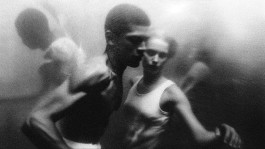
IMAGERY BY AMADOU BA.

One of the most evident manifestations of human arrogance lies in the creation of the concept of time,
and in the presumption that it could be mastered and bound to the measure of human existence.
Yet the human being is both victim and executioner of two forces born from the very depths of his own viscera, and therein lies the most profound contradiction of his nature:
he is condemned to ceaseless movement by the very instincts that will ultimately lead him into stillness.
His hypocrisy consists in mistaking this movement for mastery,
as though the perpetual exertion of his will could ever liberate him from the stillness toward which his existence is inexorably drawn.


For this very reason, stillness becomes unbearable to him. To cease moving is, in his eyes,
to cease becoming; and to cease becoming is already to resemble death.
Stillness is therefore perceived not merely as the absence of movement, but as the negation of life itself,
as though to remain still were to surrender the very condition by which the living being recognizes itself as alive.
He is consequently driven towards movement not only by the desire to become,
but by the terror of ceasing to become.
It is in the inevitable and ill-fated marriage of these impulses that the existential posture of the human being has been formed: condemned to movement by his fear of stillness,
and condemned to transformation by his fear of remaining what he is.
What he pursues in order to escape stillness is precisely what carries him, inexorably, towards it.

Here lies the peculiar fascination of the artist:
death is both the object of his deepest terror and of his most persistent attraction,
because within it resides the ultimate metamorphosis, the passage from life into that which is no longer life.
By lingering at its threshold, he can approach what he cannot possess, and simulate a mastery over what ultimately admits none.
There is something almost comical in this gesture. The fundamental guilt of the human being is, perhaps,
nothing more than having been born, for birth contains within itself the sentence of death.
From the moment in which he discovers himself naked before the world,
he discovers himself mortal; and from this knowledge, pain emerges not merely as su ering,
but as an instrument through which he may approach, rehearse,
and aestheticize the condition for which he already feels condemned.

Yet within this dark exercise of omnipotence, the very space the artist opens in attempting it yields,
almost despite himself, to the highest and purest sentiment the human soul possesses: empathy.
There is something faintly tragicomic in this — that from so elaborate a failure of mastery should emerge a feeling so noble, unbidden, as if the artist, reaching for dominion, had stumbled instead upon its opposite.
It happens when the artist abandons his own threshold to approach another's — when the pain he transfigures into form is no longer his,
but that of some small and voiceless creature, dying without knowing that it dies.
In this gesture there is no longer any aestheticization of the self,
no longer any attempt to simulate mastery over one's own end: there is only testimony.
Writing saves neither the creature nor the one who writes —it arrests nothing, possesses nothing.
It grants, simply, a witness.
And it is perhaps here, not in complicity with one's own death but in the custody of another's,
that art finds the only dignity truly granted to it.
Homo sum, humani nihil a me alienum puto.1

Liminal series-I. Amadou Ba
1 I am human, and I consider nothing human alien to me. (Terence, Heauton Timorumenos, l. 77.)
The author (me) chose to close with this line partly because it is striking and theatrical,
as any Latin quotation tends to be.
But there is a second reason: the author may appear to be lecturing from a golden pulpit,
when in reality she is the first victim of the very mechanism described here.

WORDS BY ANNA D. STORNELLI.
IMAGERY BY AMADOU BA.
One of the most evident manifestations of human arrogance lies in the creation of the concept of time,
and in the presumption that it could be mastered and bound to the measure of human existence.
Yet the human being is both victim and executioner of two forces born from the very depths of his own viscera, and therein lies the most profound contradiction of his nature:
he is condemned to ceaseless movement by the very instincts that will ultimately lead him into stillness.
His hypocrisy consists in mistaking this movement for mastery,
as though the perpetual exertion of his will could ever liberate him from the stillness toward which his existence is inexorably drawn.

Yet these forces are inseparable from the very condition that makes him human.
He is subjected, almost against his will,
to a perpetual metamorphosis through which he is compelled to become what he is not yet.
And yet, within this becoming, there is also desire: the restless impulse to transform himself,
to surpass what he has been, to find his place within the world and, ultimately,
to carve out some territory of comfort and peace in which he might feel at home.
But every transformation carries within it the terror of the unknown,
for to become is also to enter a state in which one no longer knows precisely what one is.
Thus, the very metamorphosis he desires is also the source of his fear.

For this very reason, stillness becomes unbearable to him. To cease moving is, in his eyes,
to cease becoming; and to cease becoming is already to resemble death.
Stillness is therefore perceived not merely as the absence of movement, but as the negation of life itself,
as though to remain still were to surrender the very condition by which the living being recognizes itself as alive.
He is consequently driven towards movement not only by the desire to become,
but by the terror of ceasing to become.
It is in the inevitable and ill-fated marriage of these impulses that the existential posture of the human being has been formed: condemned to movement by his fear of stillness,
and condemned to transformation by his fear of remaining what he is.
What he pursues in order to escape stillness is precisely what carries him, inexorably, towards it.

And throughout this process, there emerges, almost as a wound that refuses to close,
a certain prostitution of pain—the very condition through which the human being becomes an artist.
In the paradox of his arrogance, he does not merely allow himself to invent God,
but dares to draw himself towards Him, as though creation itself could grant him proximity to the creator.
The artist, more than anyone, seeks to inhabit those liminal moments in which the human being is suspended between what he is and what he is becoming, devising means through which time may be distorted and its passage momentarily disarmed.
It is precisely within these intervals that the artist discovers the illusion of proximity and, with it,
the possibility of control.
Death, in its ultimate irreversibility, remains beyond his reach; yet the moments that precede it can be approached, prolonged, distorted, and transformed into experience.
Here lies the peculiar fascination of the artist:
death is both the object of his deepest terror and of his most persistent attraction,
because within it resides the ultimate metamorphosis, the passage from life into that which is no longer life.
By lingering at its threshold, he can approach what he cannot possess, and simulate a mastery over what ultimately admits none.
There is something almost comical in this gesture. The fundamental guilt of the human being is, perhaps,
nothing more than having been born, for birth contains within itself the sentence of death.
From the moment in which he discovers himself naked before the world,
he discovers himself mortal; and from this knowledge, pain emerges not merely as su ering,
but as an instrument through which he may approach, rehearse,
and aestheticize the condition for which he already feels condemned.

Yet within this dark exercise of omnipotence, the very space the artist opens in attempting it yields,
almost despite himself, to the highest and purest sentiment the human soul possesses: empathy.
There is something faintly tragicomic in this — that from so elaborate a failure of mastery should emerge a feeling so noble, unbidden, as if the artist, reaching for dominion, had stumbled instead upon its opposite.
It happens when the artist abandons his own threshold to approach another's — when the pain he transfigures into form is no longer his,
but that of some small and voiceless creature, dying without knowing that it dies.
In this gesture there is no longer any aestheticization of the self,
no longer any attempt to simulate mastery over one's own end: there is only testimony.
Writing saves neither the creature nor the one who writes —it arrests nothing, possesses nothing.
It grants, simply, a witness.
And it is perhaps here, not in complicity with one's own death but in the custody of another's,
that art finds the only dignity truly granted to it.
Homo sum, humani nihil a me alienum puto.1

Liminal series-I. Amadou Ba
1 I am human, and I consider nothing human alien to me. (Terence, Heauton Timorumenos, l. 77.)
The author (me) chose to close with this line partly because it is striking and theatrical,
as any Latin quotation tends to be.
But there is a second reason: the author may appear to be lecturing from a golden pulpit,
when in reality she is the first victim of the very mechanism described here.